
Risk controls
What stops an unwanted order?
Set operational limits around automated execution and make exceptions visible to a human reviewer.
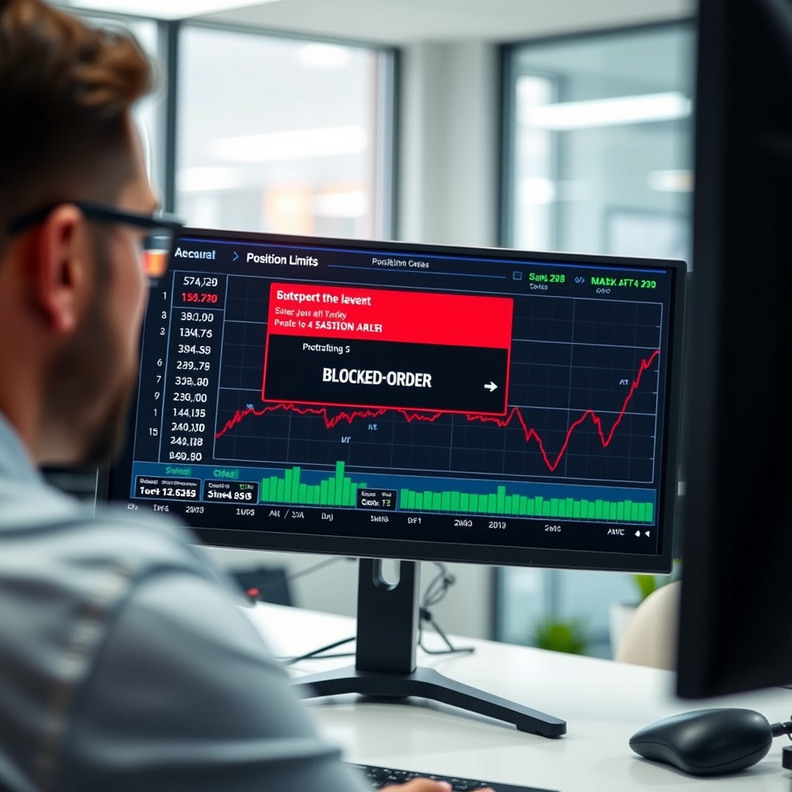
Controls belong before order submission
We configure checks against the limits you choose, such as maximum position size, permitted instruments, trading hours and a daily stop condition. The workflow can reject an instruction that falls outside those settings and record why it was rejected. A typical controls review takes one to two weeks when the strategy and broker behaviour are known. You receive a documented limits schedule, test cases and an explanation of how to pause the system. Controls can reduce certain operational errors, not eliminate market losses.
Where these controls help, and where they cannot
Your strategy needs explicit position and order-size boundaries.
More than one rule could submit orders for the same instrument.
You need an audit trail of rejected instructions.
You expect a limit to prevent losses during a sudden market gap.
Nobody is assigned to respond when an alert requires intervention.
Your limits have not been reviewed against your actual account and strategy.

A duplicate-order check before launch
Consider an operator running two rules that can react to the same price movement. Before connecting either rule to live execution, we would test whether simultaneous signals could exceed the operator's stated position limit. The work would include a pre-order check, a simulated rejection and a log entry that explains the decision. The operator would still need to approve the limit and review how the broker reports open positions and pending orders.
- Scope
- Two rules sharing one account
- Check
- Combined position before each order
- Delivered
- Test cases and rejection logs
A limit is not a market forecast
Stop instructions and size checks depend on data, connectivity and the broker's ability to process an order. In a fast or illiquid market, execution can differ from the level specified in a rule. We therefore describe each control by what it checks and when it runs, rather than suggesting it can secure a particular financial outcome. You should review the settings whenever your strategy, instruments, broker or account circumstances change.
Review the limits you already use
Share your proposed order, position and pause rules so we can discuss implementation scope.
Ask about controls